
Michael B. Jordan Workout: The Creed III Training Routine
How MBJ transformed into a world-class fictional boxer with Corey Calliet's elite conditioning system.
Michael B. Jordan's physical transformation for the Creed franchise stands as one of the most impressive athletic-aesthetic overhauls in recent Hollywood history. At 6'0" and 185 pounds of near-shredded muscle, the Jordan who stepped into frame for Creed III looked less like an actor playing a boxer and more like someone who had genuinely devoted years to the sweet science. Because in a meaningful sense, he had. His preparation for Creed III involved not only weight training but genuine boxing instruction — footwork, combination drilling, defensive movements — integrated into a conditioning program designed to produce a physique that could perform, not just look the part. The architect behind Jordan's transformation is Corey Calliet, a New Orleans-born trainer who has become one of Hollywood's most sought-after body transformation specialists. Calliet doesn't train clients the way a standard personal trainer might — his approach is immersive, demanding, and built around the premise that physical transformation requires psychological transformation first. He has famously said that most people are limited by their minds, not their bodies, and his training philosophy reflects this: he pushes clients past the point where they would normally stop, and then keeps pushing. Jordan and Calliet have developed a genuine partnership over multiple films, and the trust between them is visible in the results. For Creed III specifically, the challenge was unique. This was Jordan's third time preparing this character, which meant the baseline was already high. The question wasn't how to transform a soft body — Jordan was already in excellent shape coming off earlier Creed films. The question was how to evolve the physique into something that conveyed mastery, maturity, and elite athletic conditioning. Adonis Creed in the third film is a world champion defending his legacy, and his body needed to communicate that narrative. Calliet responded by shifting emphasis toward conditioning density — higher volume, shorter rest periods, more metabolic stress — to produce a drier, harder, more defined look while maintaining the size Jordan had built over years. The training itself combined boxing-specific work with traditional hypertrophy training in a way that sounds contradictory but works in practice. Boxing conditioning tends to produce lean, explosive athletes with endurance — the metabolic opposite of a bodybuilder's low-rep, long-rest approach. Calliet threaded these two modalities together by using boxing drills as conditioning finishers after weight sessions, keeping Jordan's cardiovascular system sharp and his body fat low while the lifting preserved and built muscle mass. A typical week might include heavy compound work Monday through Thursday with boxing sessions integrated on two or three of those days, and active recovery or pure boxing technique work on Fridays. Jordan's approach to training is marked by genuine immersion. He's spoken about how playing Adonis Creed changed the way he thinks about his own body and athletic capability. He trained with real boxers, spent time in actual gyms alongside professional fighters, and developed a working understanding of the sport beyond surface-level mimicry. This authenticity shows on screen in ways that are difficult to fake — the way he moves, the fluency of his combinations, the defensive posture. Calliet has noted that by Creed III, Jordan could hold his own technically with many professional fighters at a pad session level. Nutrition for Creed III followed what Calliet describes as a flexible but disciplined framework. Jordan ate to support performance and recovery, prioritizing lean protein, complex carbohydrates timed around training, and healthy fats from whole food sources. In the final weeks before filming began, Calliet implemented a controlled deficit and carbohydrate cycling protocol to achieve peak conditioning — the kind of definition that reads clearly under film lighting. This depletion phase is intense and time-limited, not a sustainable everyday approach, but it's what produces the competition-ready look audiences saw on screen. Sleep and recovery were non-negotiable components of the prep. Jordan reportedly aimed for eight to nine hours of sleep during intensive training blocks, understanding that the work done in the gym only converts to muscle if the recovery environment supports it. Calliet programs deload weeks deliberately, reducing volume and intensity to allow accumulated fatigue to dissipate before the next training block. This periodized approach — push hard, then recover intentionally — is one of the most important distinctions between professional-level training and the inconsistent hard work most people substitute for structured programming. If you're inspired by Jordan's Creed III physique, the pathway there is more structured than most people realize. It's not about training harder — it's about training with a purpose and tracking everything. BasedHealth lets you log your workouts with the same precision Calliet programs for Jordan: sets, reps, rest periods, weekly volume by muscle group, and body composition trends over time. Combining that with accurate macro tracking means every piece of the puzzle is visible, measurable, and improvable — which is exactly how Jordan and Calliet built one of the most impressive action-film physiques of the decade.
BasedHealth Fitness Team
NSCA & ACSM-guided programming
This program is based on publicly available training interviews and adapted using evidence-based principles from the National Strength & Conditioning Association and American College of Sports Medicine guidelines. Always consult a physician before starting a new fitness program.
The Training Philosophy
Understand the science behind the transformation
A 5-day hybrid program combining hypertrophy-focused weight training with boxing conditioning finishers, designed to build lean athletic muscle while maintaining the explosive endurance of a competitive fighter. Sessions run 75-90 minutes with boxing drills integrated 2-3 days per week.
Key Training Principles
Progressive Overload
Gradually increase intensity for continuous gains
Recovery Focus
Strategic rest periods for optimal muscle growth
Nutrition Synergy
Diet perfectly aligned with training goals
The Complete Workout Plan
Follow this exact routine to achieve Michael B. Jordan's physique
Track every set, rep, and rest period with our app
Start Tracking NowWeighted Pull-Up
Sets
4
Reps
6-8
Rest
90 sec
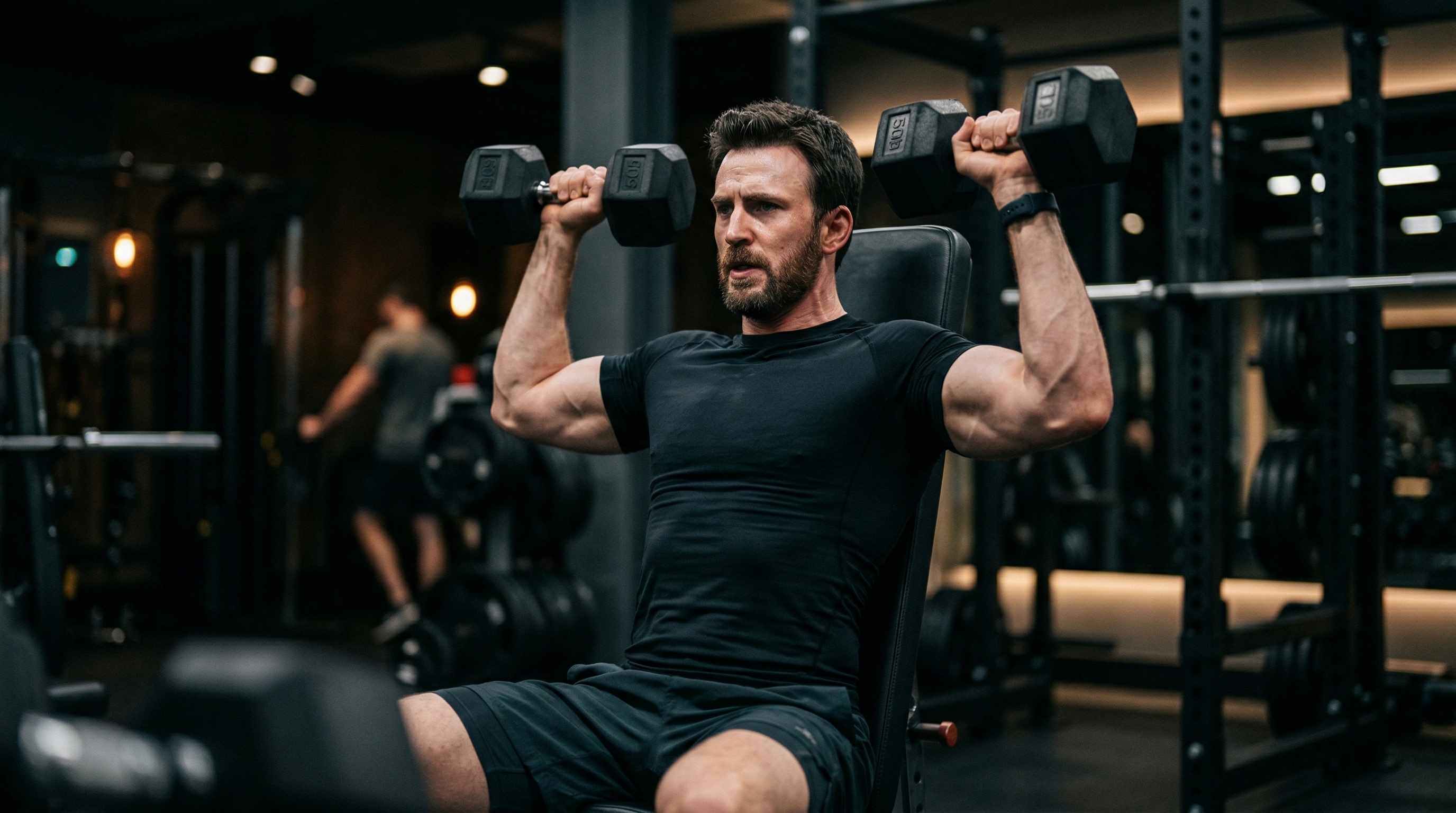
Incline Dumbbell Press
Sets
4
Reps
10-12
Rest
75 sec
Barbell Hip Thrust
Sets
4
Reps
12-15
Rest
75 sec
Single-Arm Dumbbell Row
Sets
4
Reps
10-12
Rest
75 sec
Box Jump
Sets
4
Reps
5-6
Rest
90 sec
Cable Woodchop
Sets
3
Reps
12-15
Rest
60 sec
Hammer Curl
Sets
3
Reps
12-15
Rest
60 sec
Battle Rope Waves
Sets
4
Reps
30 sec on / 20 sec off
Rest
60 sec
The Nutrition Protocol
Fuel your transformation with the right diet
Daily Macro Targets
Protein
Carbs
Fats
Track your calories and macros effortlessly with AI-powered food recognition
Start Tracking Your NutritionCommon Questions
Who trained Michael B. Jordan for Creed III?
How long did Michael B. Jordan train for Creed III?
How much does Michael B. Jordan weigh in Creed III?
Did Michael B. Jordan actually learn to box for the Creed movies?
What is Corey Calliet's training philosophy for body transformations?
Pair This Workout With a Meal Plan
Training without a nutrition plan is wasted effort. These meal plans match this program's calorie needs.
Meal Plan for Muscle Gain: High Calorie Bulking Guide
A 2800-calorie bulking plan designed to build lean muscle mass efficiently.
View 7-day plan →
3000 Calorie Meal Plan: Mass Building Guide
A high-volume 3000-calorie plan for building serious mass through structured, nutrient-dense eating.
View 7-day plan →
High Protein Meal Plan: Build Muscle & Stay Full
A high-protein plan delivering 180g+ protein daily for muscle building and satiety.
View 7-day plan →
Track The Foods In This Plan
Quick calorie and macro references for the staples in this workout's nutrition protocol.


Ready to Transform Like Michael B. Jordan?
Join thousands using our AI-powered app to track workouts and nutrition effortlessly